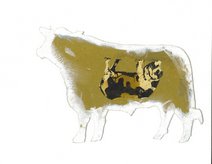
Moo Pig Wisdom is a brilliant combination of Antiquity and Prequel Modern Flea Market. We respectfully ask you to mind your children while here.

Monday, June 25, 2007

I wish everyone to Enjoy our time... Scary and wondrous as it is


You are lifted up highly in our esteem and you have
proven again why you will always be called PALIKAR !

The Capotosto Family

Richard Capotosto
Zeeland, Michigan

:Thanks Ric, and bairn, I can always count on your faith. PD

Saturday, June 23, 2007

It is Done


Graduates, Friends and Family...
Saturday, July 14, 2007 My Graduation Ceremony will be available
ANYTIME AFTER
8:00 AM CDT and viewable for 30 days from this date.

Please note that this does not mean you must attend at
8:00 AM CDT, only that this time will be your earliest
opportunity to view your Graduation Ceremony.

I will forward this email to guests who I would like to include in my great day.

Commencement Speaker:

Christine Comaford-Lynch

Chat Receptions:
Please join in a Reception and Live Chat on
Saturday, July 14, 2007 at 11:00 AM CDT.

This will be an opportunity to chat with
classmates and Colorado Tech Online faculty and staff.

The live chat will be available for 30 minutes.
You will also have a chance, while participating in the Live Chat,
to have a Private Chat Reception with family and friends.

Instructions to Attend:

Students need to go to the web address below and enter both
your Virtual Campus user name and your Virtual Campus
password. Your Ceremony will be available ANYTIME
AFTER 8:00 AM CDT and available via archive for 30 days.

Inviting Guests:
Guests can go to the web address below and type in their first
and last name, then the guest password: bsba720076
http://graduation.ctuonline.edu?KTedPi8VxxY1
(Or copy and paste the URL into the address bar.)

For all Attendees:
If not already installed, upon entering the ceremony you will be asked to
install a Flash program that is required to successfully view the graduation

Thursday, June 21, 2007

Why a Pig in a Cow, anyhow?


Friends, Romans, countrymen, truth is stranger than fiction:

On the menu in the past era of Roman Peace -- Pax Romana -- Romans would stuff a chicken with a duck, a goose with the stuffed chicken --and stuff a Pig with the three nested fowls.

Then what? Of course the Pig was stuffed in a Cow. This was cooked over the pit, and well, there you have the link that connects MooPig with the days of Jesus.

It's called Barbecue! >>pd

Wednesday, June 20, 2007

1946: G.O. -- Please Don't say Orwellian


Eric Arthur Blair (25 June 1903[1][2] – 21 January 1950), better known by the pen name George Orwell, was an English author and journalist.

Dear Writers: Honestly, to where did I arrive after all those hours of learning English? The present age of dying metaphors, and pretentious diction of acronyms and style was predicted by George Orwell, in 1946. Broadcaster: BBC 2 George Orwell: A Life in Pictures
Distributor: BBC Worldwide
Completion Date: 2003

George Orwell, 1903 - 1950
(excerpt)...Dying metaphors. A newly invented metaphor assists thought by evoking a visual image, while on the other hand a metaphor which is technically "dead" (e.g. iron resolution ) has in effect reverted to being an ordinary word and can generally be used without loss of vividness. But in between these two classes there is a huge dump of worn-out metaphors which have lost all evocative power and are merely used because they save people the trouble of inventing phrases for themselves.

Examples are: bring the changes on, take up the cudgel for, toe the line, ride roughshod over, stand shoulder to shoulder with, play into the hands of, no axe to grind, grist to the mill, fishing in troubled waters, on the order of the day, Achilles' heel, swan song, hotbed .

Many of these are used without knowledge of their meaning (what is a "rift," for instance?), and incompatible metaphors are frequently mixed, a sure sign that the writer is not interested in what he is saying. Some metaphors now current have been twisted out of their original meaning withouth those who use them even being aware of the fact. For example, toe the line is sometimes written as tow the line .

Another example is the hammer and the anvil , now always used with the implication that the anvil gets the worst of it. In real life it is always the anvil that breaks the hammer, never the other way about: a writer who stopped to think what he was saying would avoid perverting the original phrase.


Operators or verbal false limbs. These save the trouble of picking out appropriate verbs and nouns, and at the same time pad each sentence with extra syllables which give it an appearance of symmetry. Characteristic phrases are render inoperative, militate against, make contact with, be subjected to, give rise to, give grounds for, have the effect of, play a leading part (role) in, make itself felt, take effect, exhibit a tendency to, serve the purpose of, etc.,etc .

The keynote is the elimination of simple verbs. Instead of being a single word, such as break, stop, spoil, mend, kill , a verb becomes a phrase , made up of a noun or adjective tacked on to some general-purpose verb such as prove, serve, form, play, render . In addition, the passive voice is wherever possible used in preference to the active, and noun constructions are used instead of gerunds (by examination of instead of by examining ).

The range of verbs is further cut down by means of the -ize and de- formations, and the banal statements are given an appearance of profundity by means of the not un- formation. Simple conjunctions and prepositions are replaced by such phrases as with respect to, having regard to, the fact that, by dint of, in view of, in the interests of, on the hypothesis that ; and the ends of sentences are saved by anticlimax by such resounding commonplaces as greatly to be desired, cannot be left out of account, a development to be expected in the near future, deserving of serious consideration, brought to a satisfactory conclusion , and so on and so forth.


Pretentious diction. Words like phenomenon, element, individual (as noun), objective, categorical, effective, virtual, basic, primary, promote, constitute, exhibit, exploit, utilize, eliminate, liquidate , are used to dress up a simple statement and give an aire of scientific impartiality to biased judgements.

Adjectives like epoch-making, epic, historic, unforgettable, triumphant, age-old, inevitable, inexorable, veritable , are used to dignify the sordid process of international politics, while writing that aims at glorifying war usually takes on an archaic color, its characteristic words being: realm, throne, chariot, mailed fist, trident, sword, shield, buckler, banner, jackboot, clarion . Foreign words and expressions such as cul de sac, ancien reacutgime, deus ex machina, mutatis mutandis, status quo, gleichschaltung, weltanschauung , are used to give an air of culture and elegance.

Except for the useful abbreviations i.e., e.g. , and etc. , there is no real need for any of the hundreds of foreign phrases now current in the English language. Bad writers, and especially scientific, political, and sociological writers, are nearly always haunted by the notion that Latin or Greek words are grander than Saxon ones, and unnecessary words like expedite, ameliorate, predict, extraneous, deracinated, clandestine, subaqueous , and hundreds of others constantly gain ground from their Anglo-Saxon numbers.

The jargon peculiar to Marxist writing (hyena, hangman, cannibal, petty bourgeois, these gentry, lackey, flunkey, mad dog, White Guard , etc.) consists largely of words translated from Russian, German, or French; but the normal way of coining a new word is to use Latin or Greek root with the appropriate affix and, where necessary, the size formation.

It is often easier to make up words of this kind (deregionalize, impermissible, extramarital, non-fragmentary and so forth) than to think up the English words that will cover one's meaning. The result, in general, is an increase in slovenliness and vagueness!

Probably it is better to put off using words as long as possible and get one's meaning as clear as one can through pictures and sensations. Afterward one can choose -- not simply accept -- the phrases that will best cover the meaning, and then switch round and decide what impressions one's words are likely to mak on another person. This last effort of the mind cuts out all stale or mixed images, all prefabricated phrases, needless repetitions, and humbug and vagueness generally. But one can often be in doubt about the effect of a word or a phrase, and one needs rules that one can rely on when instinct fails. I think the following rules will cover most cases:
    • Never use a metaphor, simile, or other figure of speech which you are used to seeing in print.

    • Never us a long word where a short one will do.

    • If it is possible to cut a word out, always cut it out.

    • Never use the passive where you can use the active.

    • Never use a foreign phrase, a scientific word, or a jargon word if you can think of an everyday English equivalent.

    • Break any of these rules sooner than say anything outright barbarous.
Politics and the English Language, George Orwell
1946
http://www.resort.com/~prime8/Orwell/patee.html

G.O.'s Conclusion: "One cannot change this all in a moment, but one can at least change one's own habits, and from time to time one can even, if one jeers loudly enough, send some worn-out and useless phrase -- some jackboot, Achilles' heel, hotbed, melting pot, acid test, veritable inferno, or other lump of verbal refuse -- into the dustbin, where it belongs." Yes I have a recycle bin on my desktop! >>PD

Saturday, June 16, 2007

SCM and the Plastic Fork

Quality and Supply Chain Management

Supply Chain Management-Definition
Author: Jacob (Joey) Anslum
June 15, 2007

Supply Chain Management is the process of monitoring, controlling, and the overall management of a process from the raw material until the finished product is delivered to the customer. As you can imagine there are many steps involved in a manufacturing process if you back track to the origin of product’s basic building blocks; especially if you consider the number of raw materials alone that goes into even the seemingly simple manufacturing of a plastic fork. If you wanted to produce such an item and happened to have a manufacturing facility that could accommodate its production you would still need to procure plastimers, hardeners, dyes, etc. You need to know where these agents can be purchased, lead times, if there is adequate supplies to keep your facility running, transportation to get it to the facility, storage once it arrived, storage for the finished product, buyers, transportation to the buyers, and probably a few more steps that aren’t mentioned. You need to establish a “supply chain” consisting of all of these entities. (Chopra & Meindl, 2007)

Supply Chain Management means putting all of these resources together in order to meet the needs of the customer. In my business supply chains are a way of life. We have certain segments of the supply chain that are managed internally by our own employees in different departments and others in which we use external labor and expertise provided by third party suppliers. Regardless if the supply chain segment is internal or external the objective is always to same, get the finished product to the customer. One of the primary benefits of a supply chain is ensuring there are no gaps in the chain that will cause interruptions to the process. Contracts are often sought out with suppliers, transporters, etc. to provide a specific capacity of services to further ensure there is no break in the chain. As the saying goes, the chain is only as strong as its weakest link. Supply chain management helps to ensure there are no weak links and all carry their loads.
JacobAnslum lives and writes in NW Houston. He travesl internationally representing his company. He recently returned from European tour of suppliers and customers.
Reference:
Chopra, S. & Meindl, P. (2007). Supply Chain Management. Strategy, planning, & operation.
(3rd ed). Pearson Prentice Hall, Upper Saddle River, New Jersey


Re: Plastic fork Jones by Patrick.Darnell on 6/15/2007
Hi Joey:
Now you've done it. Since we have been group mates, you probably know to stop reading right now. Also you, Professor McLaughlin, if you are getting tired of my 'random abstractions,' you might want to stop here. Thank you.

For the rest of you: I have never thought of plastic forks as analogy for process improvement. Had you? What a heavy concept for convergence of supply chains. First off: The plastic fork is not Grandma's antique silver dinnerware, it is a copy of that institutional symbol. Let me continue.


In the context of PHase 3 conducting process improvement analysis -- we first define SCM. Joey aptly says: "monitor, control, and manage raw material to finished product." He tempted me by saying even if: In this case it is a plastic fork. (paraphrased)

Additionally, our course materials suggest: "Process capability measures the ability of a process to consistently meet external customer requirements." The resources also say, "Variability of Processes is due to results of external measurements varying from one market survey to the next." Process Variance is naturally occurring due to cost, quality, flow times and flow rates... all contexts that depend on supply chain alignment. Really good stuff.


Thus, when Joey said plastic forks, I interpreted that as "Hey, plastic forks even have a process." Personally I have always been agog of plastic ware in correlation to outdoor activities. Therefore I agree with Mr. Anslum's analogous corollary, and his identification of a baseline. Everyone needs a baseline to begin one's study.
"So what customer-driven process variance is possible with plastic forks?" I ask happy-heartedly.


Plastic forks, it turns out, have been re-tooled for modern green business. Eureka! And with that I submit compliance has met its lowest rung on the ladder to compliance with oil-free industry. A process that uses Polylactic acid "aka PLA" to manufacture re-duplication of the original plastic duplication of Grandma's original silver dinnerware -- "The fork I used that day and the cups used to serve beer and soda were made from a plastic resin, polylactic acid, aka PLA, a material most often made from corn but also using other plant starches including potatoes and wheat." (DeBare, Ilana, 2007)


-and- "Excellent Packaging & Supply, a small Richmond company started by King and Levine, is carving out a niche as a distributor of compost-able and biodegradable food service products.


They sell dinner plates and coffee cups made from sugar cane residue. Drinking straws and take-out boxes made from corn starch. And Spudware -- forks, spoons and knives that feel like high-quality plastic but are actually made from a biodegradable blend of potato starch and soy oil" (DeBare, Ilana , Chronicle Staff Writer, Sunday, January 7, 2007, RIDDING WORLD OF PLASTIC FORKS)


Well that covers who, what, when, where and how. I am, probably like you, getting an uneasy feeling about "ridding the earth of plastic forks." I have that brain clogging, numbness that wants to ponder "Why?"


Shoutwire.com Article: Survive in The Woods With A Plastic Fork And Some Lint
"Well, here you are lost in the bush again. How did you get there? Beats me. Too bad you didn’t bring a survival kit or some gear. After a quick inventory, you have managed to find a plastic fork and a ball of lint from inside your pockets. You’re screwed, but it could be worse. You could have nothing at all.
... http://www.shoutwire.com/comments/73814/Survive_in_The_Woods_With_A_Plastic_Fork_And_Some_Lint
You build a shelter and a fire.... Alright, so you now have shelter and a fire. But what about your plastic fork? Surely there is some use for it, right? Of course there is. Hopefully you’ve caught a few episodes of Oz, because this is going to require some prison ingenuity."Grab your plastic fork and head over to your new fire pit. Look around and find yourself a small, dry stick that you can use as a “match”.

Light that bad boy on fire. Got it? OK. Now begin gently heating the handle of the fork. It’s important to heat the fork very gently because the plastic will start to burn if it gets too hot. When the plastic begins to soften, gently form the handle into a blade shape using your thumb and index finger. Take your time and do a good job. Once you have the fork formed into the desired blade shape, allow the plastic to cool for a while.

Now the final step. Find yourself a big rock. Not just any rock will do. It needs to be the smoothest rock that you can find. Once you’ve picked your rock, you can begin the process of sharpening your plastic fork. Just sharpen it as you would any other knife. Once you’re done, you’ll have the next best thing to a real knife. Hey, if it works in prison, it can work in the woods too. Now go shank some wildlife." (shoutwire, nd)


--Heck, I don't have a plastic fork, I only have my Spudware-- WWGMD? [...what would grandma do...] Well I could distill it into Vodka! Yay, I'm saved!


(source to anecdote mislaid, retrieved from internet yesterday) http://www.shoutwire.com/comments/73814/Survive_in_The_Woods_With_A_Plastic_Fork_And_Some_Lint


Ps. I graduate in ten days; these are my last ever Discussion boards, and I am happy.

Pat,
You've done it again! I am smiling ear to ear! Thanks!
Courtney P.

Blog Archive

SUNDAY :: bishop FM 105.9 Auckland


[Go To SOURCE]

Gary Grainger LIVE BluesShow from Auckland, 6 to 8PM LondonTime .... you listen too.

DISCLAIMER

: It is PROHIBITED by law to use our service or the information it provides to make decisions about consumer credit, employment, insurance, tenant screening, or for any other purpose subject to the Fair Credit Reporting Act, 15 USC 1681 et seq. MooPig Wisdom does not provide consumer reports and is not a consumer reporting agency. The information available on our website may not be 100% accurate, complete, or up to date, so do not use this information as a substitute for your own due diligence, especially if you have concerns about a person’s criminal history. MooPig Wisdom does not make any representation or warranty about the accuracy of the information available through our website or about the character or integrity of the person about whom you inquire. So dip your balls in turpentine and get rid of your own fleas before calling me out.

Ask Someone Who Cares -- SUCH AS SUCH MULCH

To report any abusive, obscene, defamatory, racist,
homophobic or threatening comments, or anything that may violate any applicable laws, please click
--ask_someone_who cares -- ASWC to report with pertinent details.

Anyone posting such material will be immediately mesquitte blackened over a very hot pit fire down at C and J's BBQ on Harvey-Elmo-Weedon Road, and permanently removed from all servers, its IP
owner will be locked in a small room with back issues of
The ECONOMIST, and one scratchy re-mix 8-track tape of Steely Dan's first album...
IP addresses might be recorded to aid us in enforcing these conditions, that is if we cared.

A Fantastically Flawed Script for a Jazz Rock Opera -- "GAZA"

A Fantastically Flawed Script for a Jazz Rock Opera -- "GAZA"
GAZA by Pat Darnell for the Age of Attritionally Challenged

Email MooPigster Customers' Alert

http://www.youtube.com/watch?v=CywR3ouHKP4
If you receive this post via email, you notice it is mostly 'blank'.
We at MooPig Surmise, that at this point, one either says:
"WOW, I'm off the hook, and don't have to pay any attention to that pesky MooPig STUFF!!"
-- OR --
"Hey, where is it ...?"
The answer is: "IT IS A youTUBE presentation"... and you will now click on the http above to go see this modern miracle of technology.

MooPig Wisdom is Your Life-Line to Parody:
24\7 -- We accept all Calls from Contestants

MPW Unique Value Proposition, UVP
Shards of Evidence ... Opinion and Editorial ... We Blunderbuss indigestible Ersatz of Readers' and Writers' ... Explain Strategies of quasi-firms... and some not so quasi ... 110% Proof
One Only
Advertisement Only One
Publisher of Satire ... Enemy to Bombast ... Very Swank ... More Fun to Write than to Read

MooPig Wisdom is online to provide spring board for writers.
MooPig is the Writers' Writer that encourages voice, content, and style. PD

Bill Gaines said it

Bill Gaines said it
"My staff and contributors create the magazine," declared Gaines. "What I create is the atmosphere."